Hiking the High Sierra with Low Vision

Low vision, for me, means poor central vision but fairly reliable peripheral sight.

When I hike the High Sierra, I carry several shades of sunglasses, switching them as the light shifts from morning glare to afternoon shadows to forest dimness. For days at a time I walk through granite passes, meadows, and forests, letting the landscape unfold mile by mile.

Long before I lost my central vision, I was taught another way of seeing. As a young Boy Scout, my scoutmaster, a former Marine, warned us not to trust our eyes alone. “They miss things,” he said. “Roots, rocks, holes. Use your feet to see.” On nights of the new moon he would lead us down trails in total darkness, forcing us to feel our way forward step by step. That practice stayed with me.

Sixty years later, on a steep descent scattered with roots and rocks, I discovered just how much. Twice, as I scanned the ground and set my foot toward what looked like safe earth, my foot shifted on its own, landing inches away at a slightly different angle. The placement was perfect. My eyes had chosen one spot, my foot another. And my foot was right.

The surprise was sharp, almost eerie, a reminder that something in me had learned to trust the ground without seeing it. With years of scanning, practice, and attention, I now hike with far greater confidence. In the High Sierra, where every step matters, my feet have become my eyes.

Attention and Grace

I only grinned
into a smile
after walking nearly four miles
through the forest cemetery.

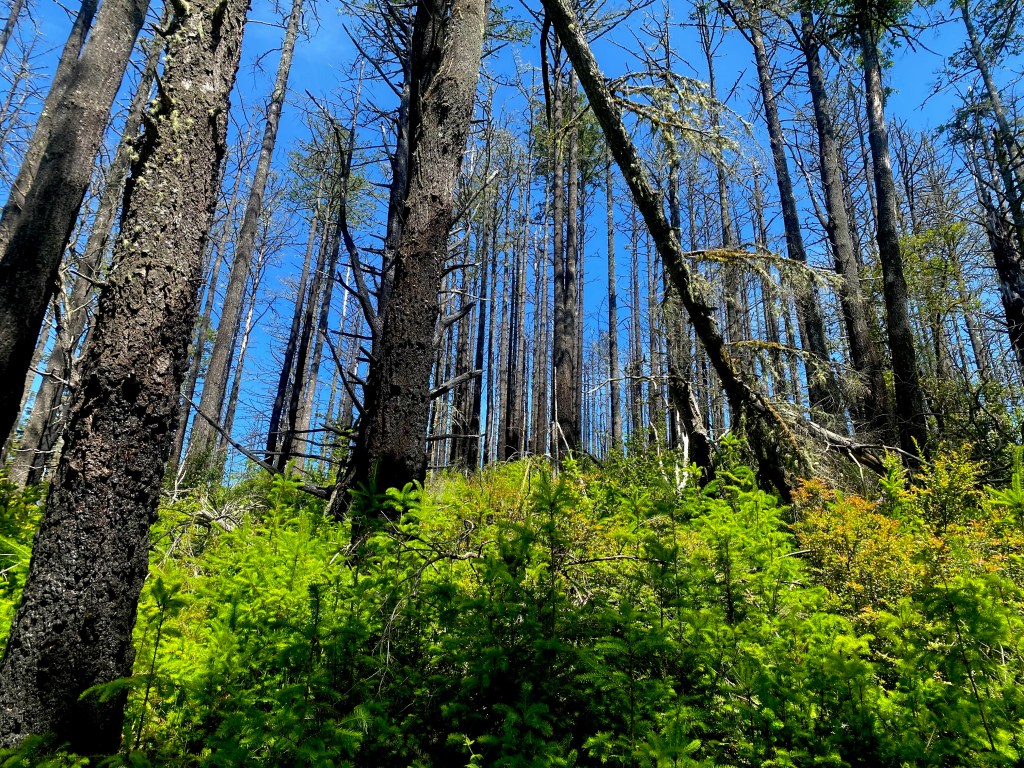
The trees, now grave markers
glazed, polished,
stood still.
No echoes from 

lost years to come.

They simply stood,
extraordinary in their silence,
offering a history
of drought,
of hard winters,s 

of the wildfire,
of the windstorm.
all inscribed
in blackened stumps,
as if a careful hand
had left them behind
to be read.

The dismay
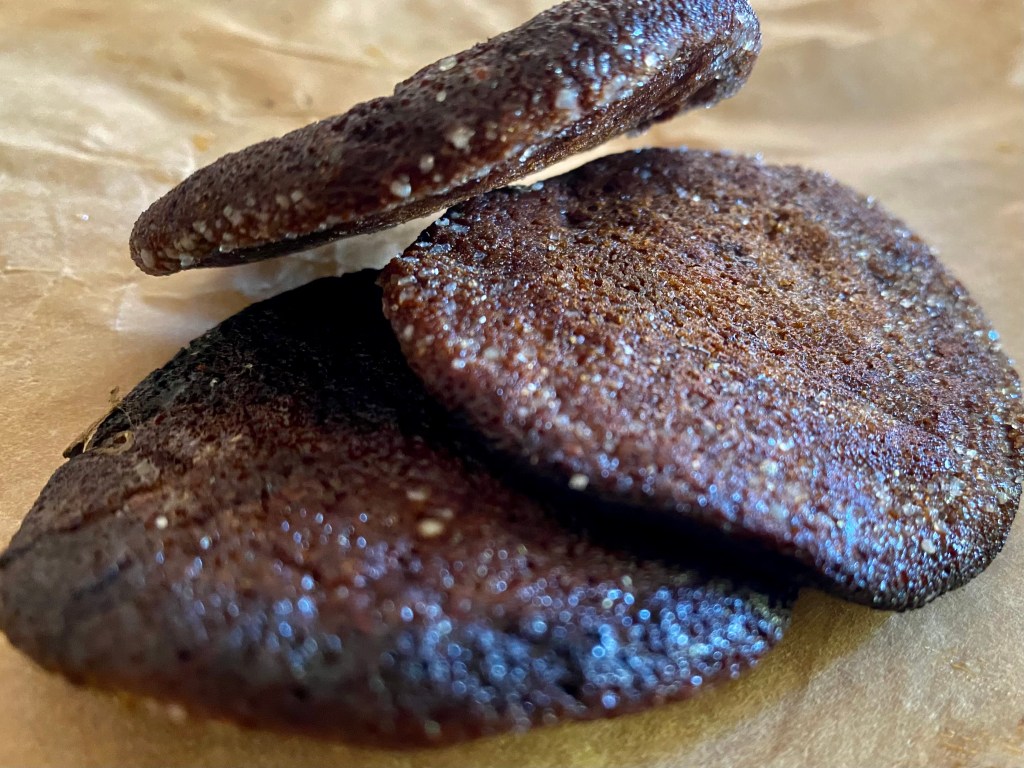
of burning a batch of cookies,
the charred domes of dough,
may seem a small thing
but in my world,
it’s the same lesson:

attention.
and grace.

How It Happens

I slide the sheet of raw cookies
into the oven. Douglas fir trees sit still,
leaning into the canyon, wafting scents of maturity.

I missed the timer. The cookies
burned; black and hard
in a matter of minutes.

that same fir forest
caught too much heat.
A single spark,
in a few centuries of growth,
and everything was burnt
and hard. And standing,
to be remembered.

Still in loss,
we reach began again.

This time my eyes stayed home.
This time with the deep breath
that comes after ruin.

The fir cones cuddled
befriended by the fire
cleared mineral rich ground.

When the rains returned,
thousands of seedlings rose as
small green monuments
in the headlands of recovery.

That is how
attention works.
How resolve roots itself.
In their world.
In mine. In ours.

Weeding

Learning to Tend the Garden—and Myself—By Feel, Not Sight

In the slow shift from winter to spring, I’ve found a new rhythm in the garden—less about conquering, more about listening. With my eyesight changed and my tools narrowed, I’ve begun to notice what I once worked too quickly to see.

In the slow shift from winter to spring, I’ve found a new rhythm in the garden—less about conquering, more about listening. With my eyesight changed and my tools narrowed, I’ve begun to notice what I once worked too quickly to see.

In spring, after the long, heavy weight of winter has finally lifted, the ground lets go. Moisture still clings to the roots, and weeding becomes something like house painting—ritualistic, restorative. I’ve come to love it.

I remember painting my new grandson’s room not long ago. Broad, sweeping gestures with the roller, a fine mist of paint rising and drifting like pollen on the air. That roller, the only tool I could manage now. I can’t do the fine work anymore—the cutting-in around the windows, the careful edging along the trim. Once, when I could see, I was the fastest and the best. That’s not just memory speaking; it’s fact. I had the eye, the steady hand.

Now I find the same quiet satisfaction in filling a landscape bin to the brim with the invaders: wild geraniums, the sticky ones that sneak in under cover, mostly hiding among the innocent. I’m given a short list—two or three kinds I’m allowed to pull. It’s a careful operation, something almost meditative. Like a monk tending the sand garden, I tread softly, kneel with head low, mindful of the resident pollinators—those delicate first-year perennials just beginning to claim their place, or the tough little elders, half-buried under brash newcomers.

Franny walks me through, as she does from time to time, pointing out the offenders with little risk of harming her resident pollinators. I listen. These weeds are generous this time of year—they surrender easily. And clearing them away brings back order: the eye can follow the natural lines again, the bees can trace their scented paths, and our black and white cat can stalk through the newly opened trails with the self-importance only cats can manage.

There was a time when I tackled the garden with power tools. Big jobs. Loud jobs. I didn’t weed much then—it seemed too small, too tedious. Now it feels like purpose. I like being of use. I’m learning the slow art of tending, and in doing so, I’m rediscovering the quiet authority of the garden—its power, its patience, and the way it makes room for everything, even me.