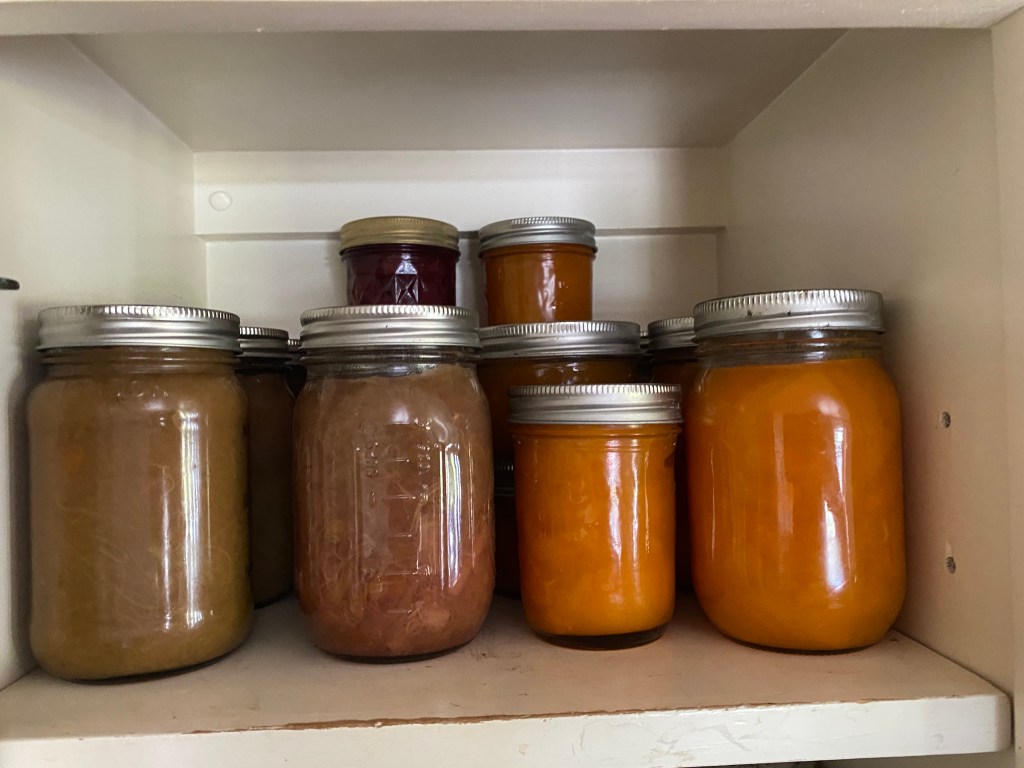
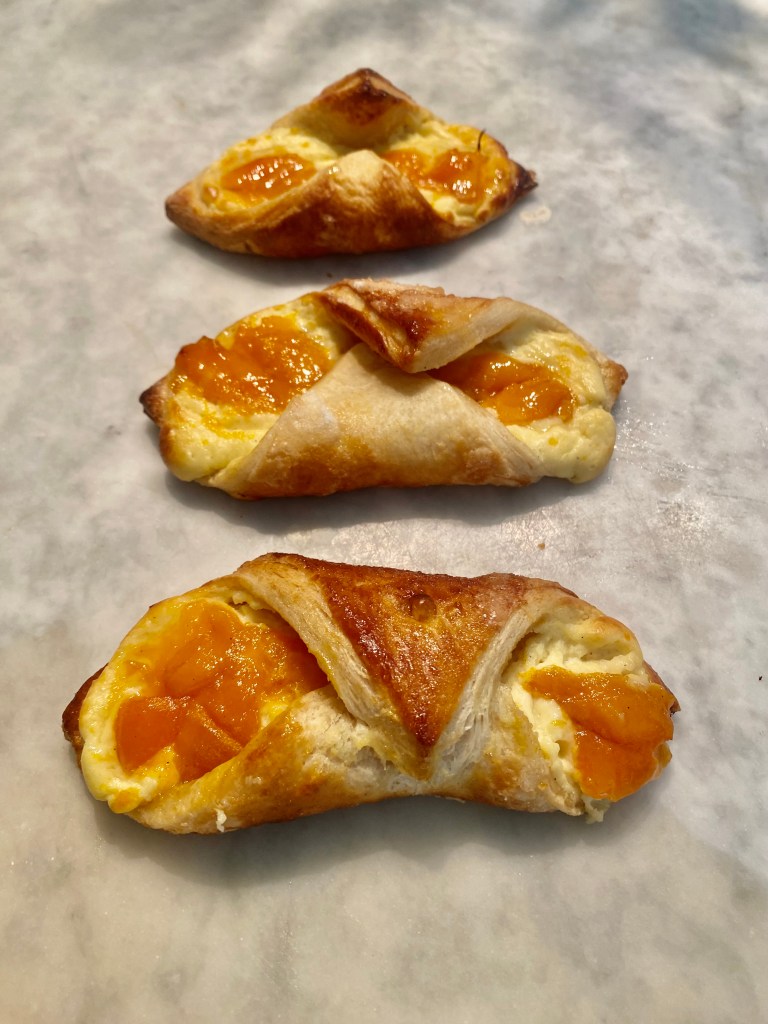
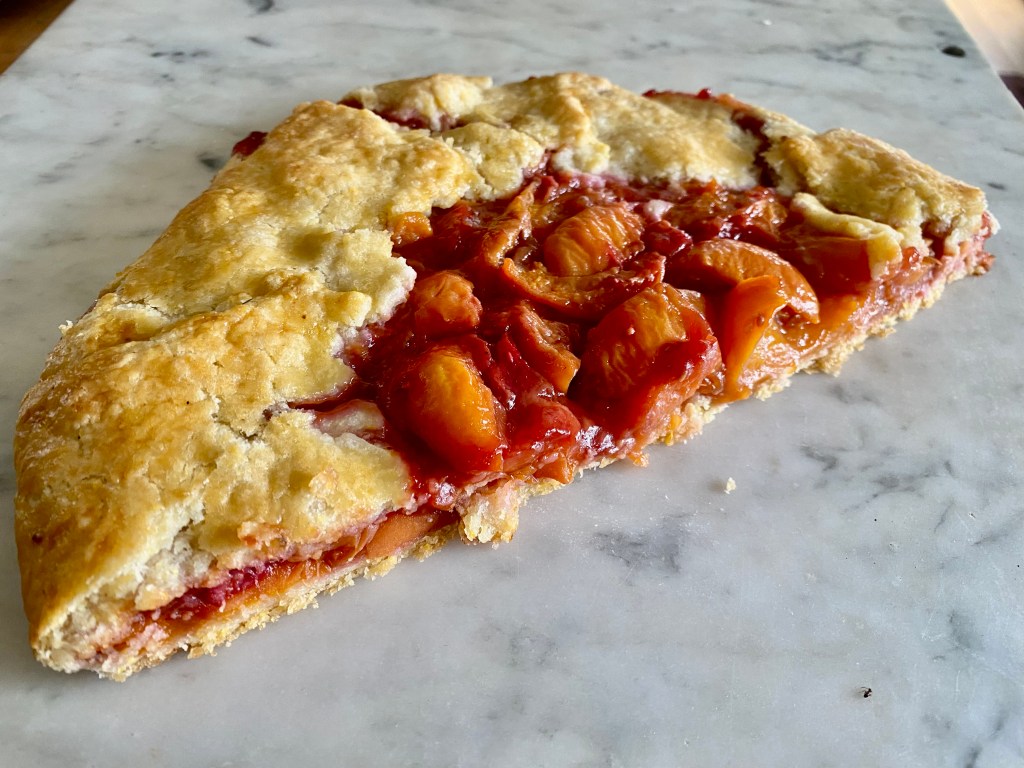
The organic apricots arrived. First, we canned. Then the award-winning galette, this time, apricot raspberry. At last, the cheese and apricot Danish, tucked into folds of croissant dough
The bakers, working quietly in their little “bakery,” paused to give thanks, to the trees and the fruit, to the farmers, the weather, to all the small mercies
that brought sweetness to their hands.
They relished the poetry of their lives, just as they were.
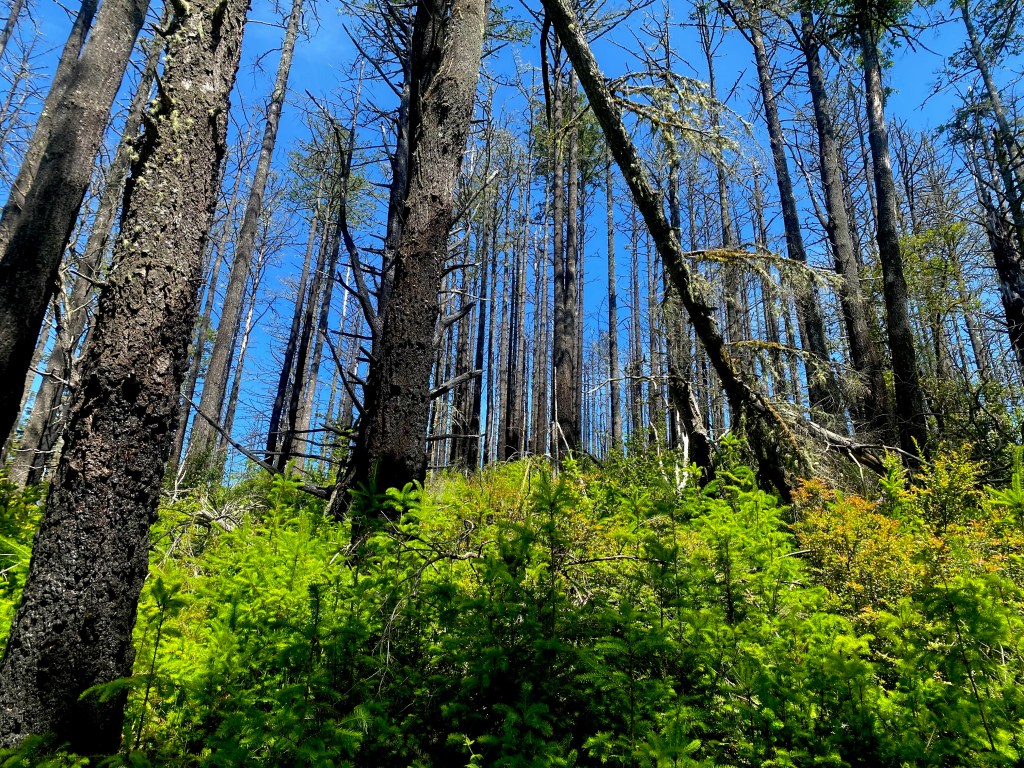
I slide the sheet of raw cookies into the oven. Douglas fir trees sit still, leaning into the canyon, wafting scents of maturity.
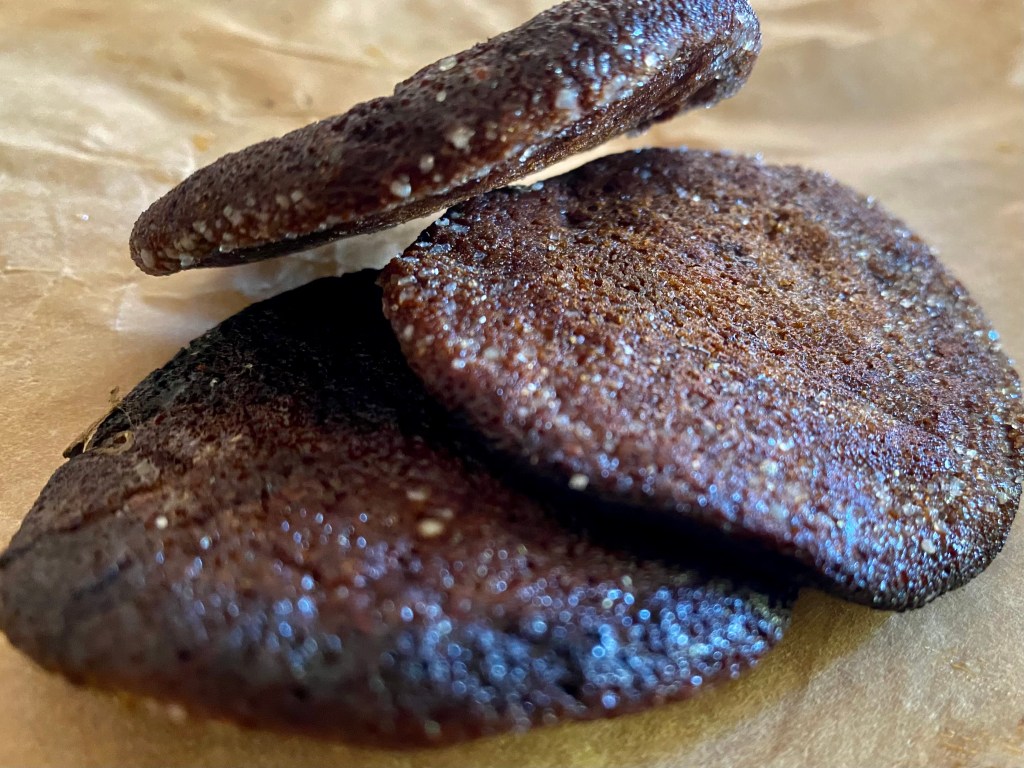
I missed the timer. The cookies burned; black and hard in a matter of minutes.
that same fir forest caught too much heat. A single spark, in a few centuries of growth, and everything was burnt and hard. And standing, to be remembered.
Still in loss, we reach began again.
This time my eyes stayed home. This time with the deep breath that comes after ruin.
The fir cones cuddled befriended by the fire cleared mineral rich ground.
When the rains returned, thousands of seedlings rose as small green monuments in the headlands of recovery.
That is how attention works. How resolve roots itself. In their world. In mine. In ours.
I told myself a new oven might lift the fog. That its polished steel and humming heat would turn frustration into something lighter—something with the weight of a few grams of sadness rather than a full pound of despair. I imagined that, with enough patience and sugar, I might bake my way back to joy, or at least to the remembered spark of taste.
Cookies had always been part of my landscape. I baked them for years—not out of habit but devotion. Even after radiation scorched my taste buds and left me navigating the strange topography of recovery, I kept baking. Something in the ritual—the quiet alchemy of flour, butter, sugar—kept me grounded. I kept waiting for the moment when a cookie, just one, might strike the lost chord and bring flavor rushing back.
Now, nearly two years into recovery, there is movement. Subtle but sure. Where once everything tasted like damp cardboard, now I can distinguish edges, feel the slight warmth of rosemary, the clean strike of lemon. My taste, like an old riverbed after a long drought, has begun to carry water again.
Through it all, I baked. Not always well, and not always with hope, but I baked. Franny, patient and loyal, has served as my flavor-tester, my witness to each attempt. I read recipes with a magnification machine that speaks them aloud, a strange partnership between stubbornness and technology. I stage my ingredients before I begin, gathering each one like a settler preparing for winter. I check, double-check. Then I let go. Let my hands remember the mixing, the folding, the way dough should feel between fingers.
Low vision has made the process slower, sometimes maddening. But when the batch comes out right—golden, whole—it validates the part of me that refuses to be undone.
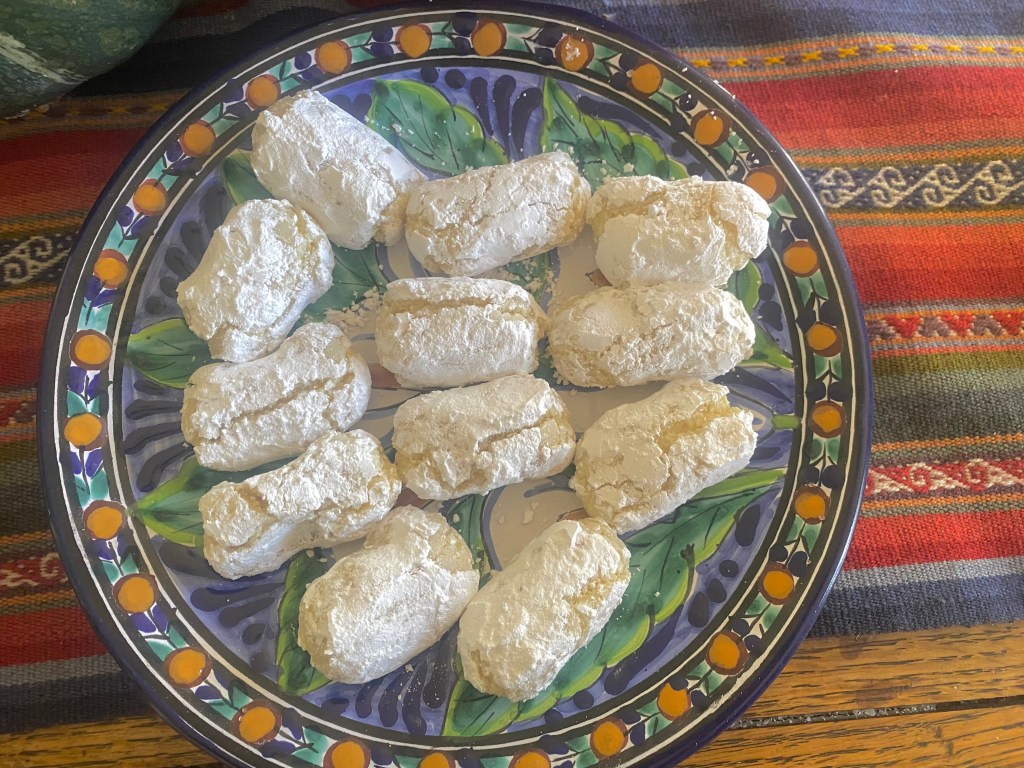
This week I prepared dough for a couple hundred cookies: Ricciarelli, those soft Italian almond clouds, and a Lemon Rosemary Butter cookie, sharp-edged and fragrant. I stretched the work across several days to ration my energy, still precious after treatment. One day for mixing. Another for shaping and freezing. Today, under my wife’s watchful eye, I will bake them. And if all goes well, I will not burn them.
So it goes. Careers collapse into avocations. Sadness finds expression in new disciplines. And sometimes, against the odds, an old passion flickers back to life—not as it was, perhaps, but alive all the same.
Being in the blind community, I’m often told to continue doing what I love to do. Just do it differently. Hearing that mantra hitches on to the ‘old school’ mottos of ‘get yourself up, dust yourself off, and start all over again’. Those youthful jingles sometimes push us, sometimes encourage and sometimes bite.
With years of High Sierra hiking under my belt I went to Nature to understand how to carry on with my passions in the face of dramatic changes to my abilities. I now hear, ‘look at the creek racing down the mountain. Last year in a massive storm with high winds, a blow down’ of a tree community clogged the creek’s path with debris of loose rock, dirt and branches. What did the creek do? No pondering or hand ringing. The creek kept moving, right? Or, in this case, the creek made a pond and then flowed over the top of the debris.
One of my struggles in adapting my baking style is the rhythm of my moves about the kitchen. Flowing from recipe to gathering and measuring ingredients to mixing and baking. with much experience a cadence develops and is memorized by my soul. In my blood in other words. With low vision the rhythm has slowed and the cadence revised through new steps taken to ensure I’ve not missed an important point in a recipe or that I’ve measured correctly, gathered all the ingredients, mixed just right and baked to perfection.
In conversation, the creek changed its rhythm, adding steps: a pond, overflow over a dam. As an ancient example I tingle realizing the connections as I stand in a fast current in a wild river casting a fly to a spot behind a large boulder. Because I walk the river understanding better its features. Its riffles, eddies, pools and all the rest. The understanding that change is forever and my changes in vision and body function are simple and natural and I must simply let loose and be in my flow. as it changes throughout the length of a river, of a life.

 Adapting Daily